
Biomedical hardware and optical diagnostics.
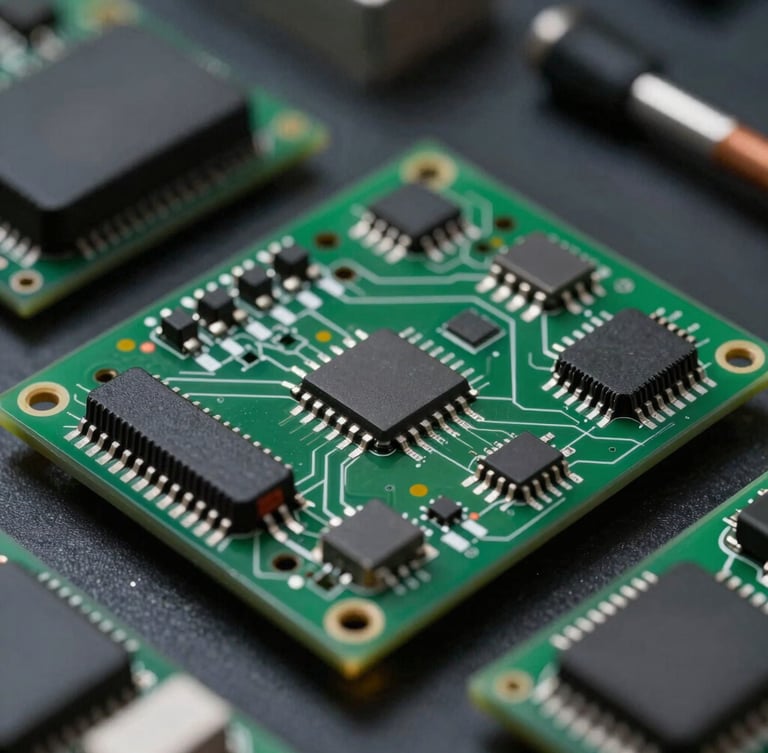
Translating complex optical physics into functional PCB layouts and embedded instrumentation. Specialising in point-of-care diagnostics and non-invasive spectral analysis.
Simultaneous dual-analyte spectrophotometry.
A portable, non-invasive diagnostic prototype designed to estimate urinary uric acid and creatinine ratios simultaneously using multi-wavelength near-infrared LED spectrophotometry.
Hardware-software co-design
By combining multiple NIR LED spectrophotometers with a low-power microcontroller, the system isolates overlapping spectral absorption curves. The device establishes calibration curves in mixed solutions, enabling clinical-grade at-home monitoring.
System architecture
The analog front-end utilizes high-precision transimpedance amplifiers to capture micro-amp level photodiode currents, converting optical signals into stable digital values for real-time ratio estimation.
Spectral range: Near-Infrared / UVB. Microcontroller: 32-bit ARM Cortex. Software: MATLAB modeling, embedded C. PCB: 4-layer impedance-controlled layout.
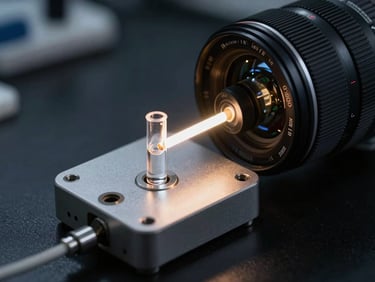
Award-winning diagnostic hardware.
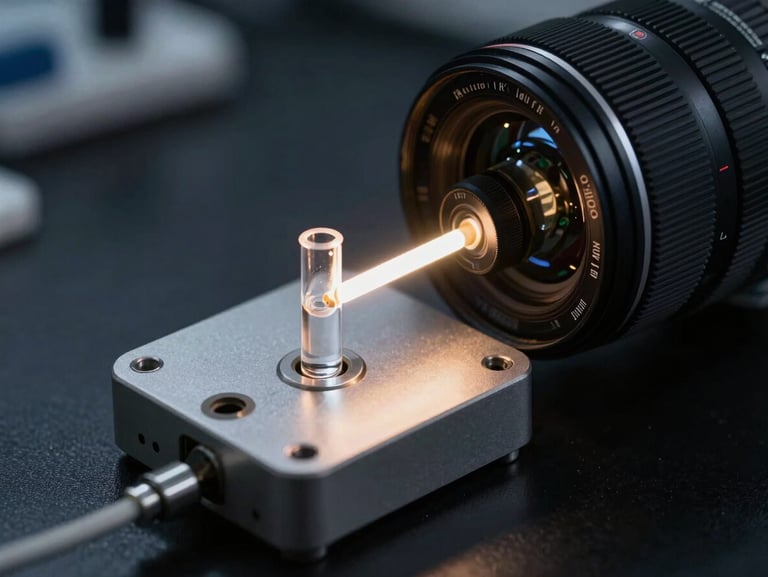
Awarded third place globally in the Engineering World Health Design Competition. This prototype isolates urinary uric acid using characteristic UVB absorption, serving as the physical proof-of-concept for subsequent biophotonics research.
Core technical domain.
Hardware design
Analytical tools
Embedded systems
Altium Designer, analog front-end layout, impedance matching, and multi-layer PCB fabrication for high-sensitivity optical sensors.
MATLAB spectral modeling, LTSpice circuit simulation, and signal processing algorithms for noise reduction in optical paths.
Bare-metal C firmware, digital signal processing, real-time data acquisition, and low-power microcontroller power management.